Start Here: Raw feeding in 30 minutes

What is BARF?

When people say “BARF,” they mean Biologically Appropriate Raw Food. In plain language: real, minimally processed foods—raw meat, edible bone, organs, with small extras like veg/fruit and a couple of sensible supplements. Think of it like building a dinner from simple ingredients and then checking you’ve covered the big nutrients, especially calcium and phosphorus, iodine, zinc, and omega-3s. We aim for widely referenced targets (such as FEDIAF-style ranges) so a recipe isn’t just tasty, it’s truly balanced over time [1]. A very common beginner bowl is mostly muscle meat, a safe source of calcium (soft, edible bone or measured bone meal/eggshell), a touch of liver and another organ, and a drizzle of omega-3 oil when fish isn’t on the menu [1][18][19][20][21].

Calculators & helpers

Plan portions and build balanced recipes with simple steps. Friendly guidance first, science checks behind the scenes.

Later, these buttons will open our dedicated calculator apps in a new tab.

Why switch to BARF?

Most people come to raw feeding because they want more control. You can see every ingredient, pick lean or richer cuts to match your dog’s energy needs, and leave out the things that upset their tummy. Many owners notice nicer coats and calmer skin once they get omega-3s right and avoid known triggers. Stools can become smaller and less smelly. Some dogs love the real-food textures and finally clean the bowl without fuss. There’s also the satisfaction of prepping something you’d be happy to handle yourself. None of this is magic—good hygiene and sensible portions still rule—but it’s a style of feeding that can feel refreshingly straightforward once you learn the basics.

The honest downsides

Raw meat can carry germs like Salmonella and Campylobacter. That’s normal in the food world, and it’s why kitchens have rules. Handle your dog’s raw food the same way you’d handle raw chicken for people: keep it cold, keep it separate, clean first, then sanitize the area, and wash hands. These small habits make a big difference [4][5]. Bones also deserve respect. Skip cooked bones and very hard, weight-bearing raw bones; they can splinter or break teeth. If you want chewing time, stick to softer, right-sized, edible options and supervise closely—or use ground bone or a measured calcium source if you prefer zero chewing risk [10][11].

Fish has one extra step: certain wild species in the EU/UK are managed with freezing rules to control parasites, so buy from suppliers who follow those rules, or use fish/algal oil for omega-3s when you’re unsure [14][15][18]–[21]. Finally, BARF does take a little planning—portioning, freezing, and thawing—but once you batch prep, the day-to-day is quick.

What to think about before you start (allergies, balancing, supplements)

If your dog has an iffy tummy or itchy skin, start simple. Pick one easy protein (chicken or turkey is common), keep meals plain for a week, and watch how your dog does. When things look good, add a second protein and note any changes. Protein rotation over weeks helps you cover nutrients naturally. On the balancing front, calcium and phosphorus are the big duo. A typical target falls around 1.2–1.4 parts calcium for every 1 part phosphorus, with the total amounts matched to your dog’s needs[1]. If you don’t use edible bone, no problem—add a measured calcium source to boneless meat so that ratio stays healthy. For omega-3s, oily fish is great; if fish is awkward, use fish oil or algal oil in measured doses. Start low, build slowly [18][19][20][21].

Iodine lives in tiny numbers, so don’t “stack” sources (for example, don’t add kelp if your multivitamin already includes iodine) [16][22][23]. Most trace minerals are handled by a sensible mix of meats and organs; a recipe checker helps you spot gaps rather than guessing [1]. Supplements should be boring and targeted: calcium if no bone, omega-3s if no oily fish, a tiny iodine source if the plan needs it. Green-lipped mussel can be a joint extra in some dogs, but quality and dose matter and study results are mixed [24][25][26].

Puppies: strong, steady growth

Puppies, especially large breeds, need steady—not extreme—nutrition. That means a correct calcium total, a good calcium-to-phosphorus ratio, and sensible fat. Wild swings here can affect developing bones and joints [1]. Keep textures easy to manage: softer edible bones, ground bone, or measured calcium rather than big chunks a pup might gulp.
Feed smaller meals more often, and adjust portions every couple of weeks as the number on the scale changes. Introduce new proteins one at a time; go slowly with organs. If your vet is tracking growth charts, bring a simple food log so you can both see what’s working. And remember: supervision during any bone chewing is not optional. If you’d rather not supervise, just use ground options and keep the benefits without the drama.

Seniors: gentle and thoughtful

Older dogs can enjoy BARF too, but think comfort. Keep fat in a comfortable range, especially if there’s a history of tummy upsets or pancreatitis risk. If chewing is hard, choose ground bone or a calcium powder over whole pieces and aim for softer textures in general. Omega-3s can support stiff joints; a vet-approved joint plan may be helpful when aches show up [18][19][20][21].
If your senior has kidney, heart, or other medical issues, ask your vet how to tailor protein, phosphorus, or sodium. Smaller, more frequent meals often sit better. The goal is “steady and happy,” not “extreme makeover.”

What can you feed?

Start with proteins that are easy to find and easy to digest. Chicken is flexible: breast is lean, thigh is a bit richer, so you can adjust energy with simple swaps. Chicken wings and necks are classic soft, edible bones when sourced from trusted suppliers and served in sensible sizes with supervision [10][11]. Turkey behaves much like chicken and can be a nice second protein. Beef brings iron and zinc; pick leaner cuts if you’re keeping an eye on weight. Lamb tends to be higher in fat, which is handy for skinny dogs who need more calories. Salmon and other oily fish (like sardines or mackerel) bring the EPA/DHA your dog’s skin and joints will thank you for; just remember those freezing rules for certain wild fish or use oils when in doubt [14][15][18]–[21].

Organs matter, but they’re powerful—about five percent liver and five percent of another organ (kidney, spleen) is a common starting point. Small amounts of puréed veg or fruit can add fiber and variety if your dog does well with them; keep extras modest so the important nutrient ratios don’t drift. If a bowl is mostly meat and organs with a correct calcium source and a little omega-3 support, you’re basically on the right road.

What should you never feed?

Here’s where the rules are simple. No cooked bones. Ever. They splinter. Avoid very hard, weight-bearing raw bones that can crack teeth or cause blockages; if you’re unsure whether a bone is safe, it probably isn’t [10][11]. Keep grapes and raisins off the menu, plus chocolate, caffeine, alcohol, xylitol, and macadamia nuts. Onions are out, and large amounts of garlic aren’t a good idea either. Skip salty, spiced, or cured meats meant for people.

Watch liver amounts so vitamin A doesn’t creep too high over time. For fish, follow safety guidance or stick with omega-3 oils when you can’t verify handling [14][15][18]–[21]. If your dog has a known condition—like pancreatitis—treat high-fat scraps as off-limits and keep meals nice and steady with leaner cuts.

A clean, simple routine you can copy this week

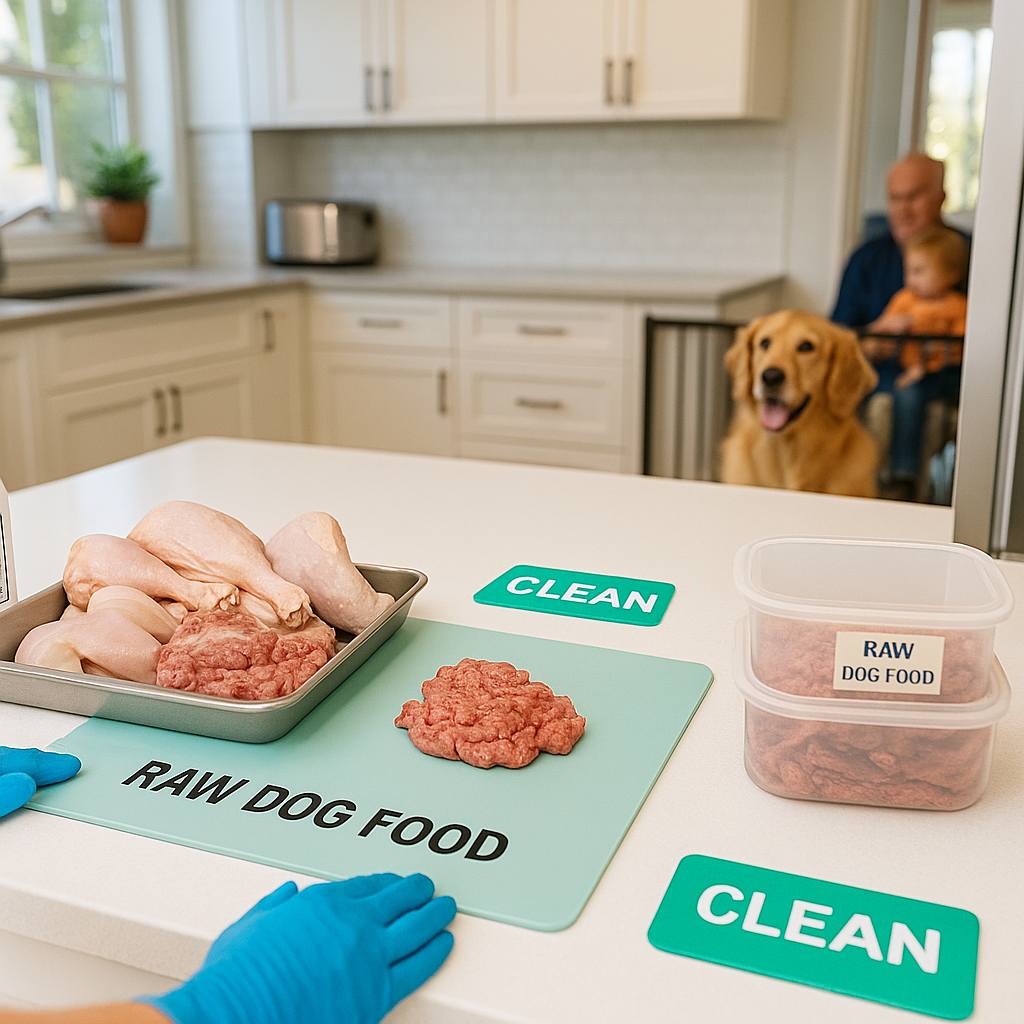
Day one is not the day to build a twelve-ingredient masterpiece. Keep it quiet and clean. Thaw tomorrow’s portions in the fridge inside a sealed box. Use a dog-only board and knife. After prep, wash with hot soapy water and then use a food-safe sanitizer; follow the contact time on the label. Bowls get washed after every meal. Hands get washed before and after. That’s it.

Over the first three to four days, feed a single protein with a safe calcium source and a tiny amount of liver. If your dog is happy—good stools, normal energy—add the second organ and, if fish isn’t in the plan, begin an omega-3 oil in small measured amounts. By day seven or ten, you’ll have a calm routine. This is a good moment to check your numbers with a recipe calculator so calcium, Ca\:P, iodine, and omega-3s are where they should be [1]. Then you can start rotating proteins week by week.

A word on households with extra risk

If your home includes toddlers, elderly family members, or anyone immunocompromised, you can still feed raw—but you’ll want “restaurant habits.” One adult handles raw prep while the kitchen is otherwise empty, surfaces are cleaned and then sanitized, and hands are washed before touching shared items. Bowls live out of reach and get washed immediately after meals. Some families even feed outdoors to keep the kitchen extra calm. If that all sounds like too much right now, it’s okay to wait, or to use cooked options until life is less busy [4][5].

Doc MeBarfly’s friendly tip:

Before you switch, ask your vet for a basic blood screen. If anything looks unusual—iron low, thyroid quirky, liver enzymes high—you can pick proteins and supplements that make the first month smoother. It’s a small step that helps you start smart.

The bottom line

BARF isn’t complicated once you respect two ideas: food safety and nutrient balance. Treat raw like raw chicken—cold, separate, cleaned, then sanitized—and you remove most of the worry [4][5]. Build bowls from simple parts—meat, a correct calcium source, a touch of organs, and omega-3 support—and you’ll keep the nutrition steady [1][18]–[21]. Puppies need plenty of building blocks to grow (steady calcium, balanced energy, and gradual variety), and seniors benefit from gentler textures plus a little added joint support. Start small, monitor the weight, keep notes, and use the tools to check the numbers. Real food plus real science is a good place to be.
©2025 MeBarfly.com - All rights reserved